The most overlooked pitfall in custom wardrobes isn't the material or the color – it's the interior layout.
Many designers cut corners by reusing templates – three wardrobes with identical internal divisions. But do you have a two-person household or a multi-generational family? Do you love wearing dresses or suits? They don't care.
The result? The wardrobe looks good upon installation but is "truly frustrating" to use.
Hanging space is always more practical than shelving.
Why? Because shelving has several inherent drawbacks:
Folded clothes get messy the moment you pull one out – 5 minutes of folding, 5 seconds of chaos
Clothes at the bottom are forever forgotten
Hard to reach, especially high shelves
✅ The right approach: Wardrobes should prioritize hanging space, with shelving as a supplement (for bedding, off-season clothes, bags, etc.). More hanging, less folding – that's the secret to a wardrobe that truly works.
3 Key Design Elements for Wardrobe Layout
Don't mix clothes from both partners in the same hanging section.
Everyone has different dressing habits. Separate hanging zones are clearer and more efficient. Divide by "person" – each manages their own space.
Within each hanging zone, subdivide further:
Short clothing (35-40 inches / 90-100cm high): T-shirts, shirts, jackets
Long clothing (55-60 inches / 140-150cm high): Dresses, trench coats, overcoats
Pants rack: Keep trousers crisp and wrinkle-free
Tip: If your family has many pants, consider a pull-out pants rack – easy to access, one slot per pair, always neat.
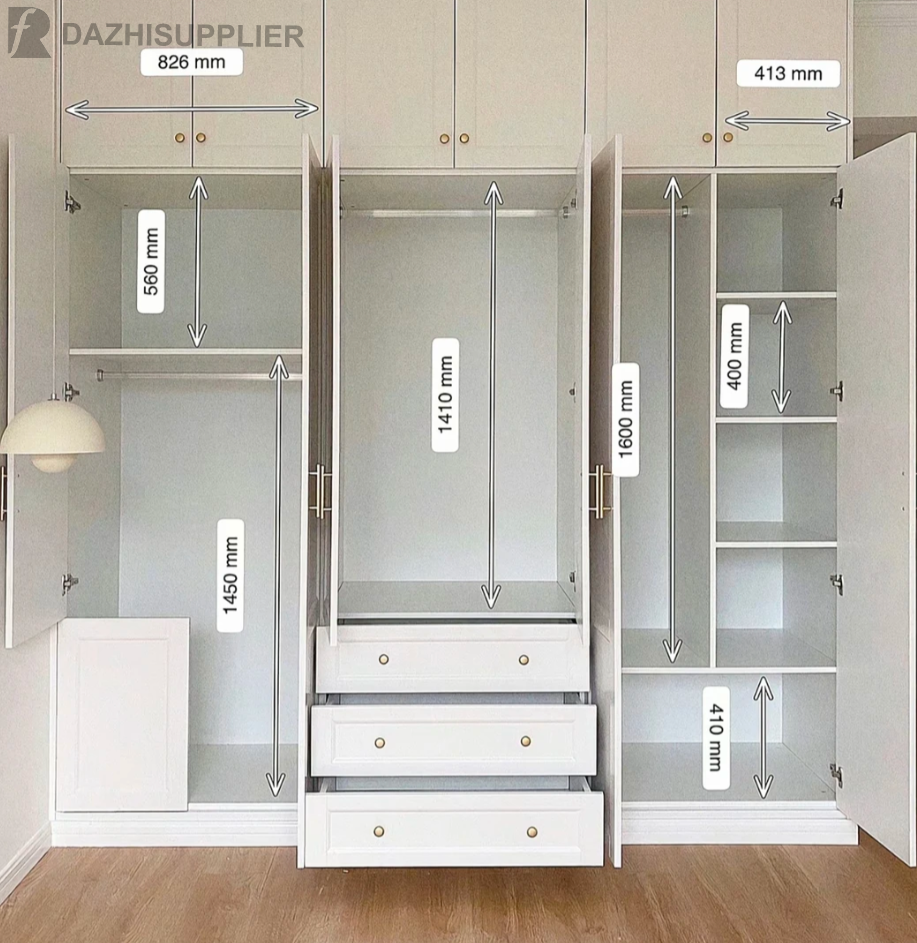
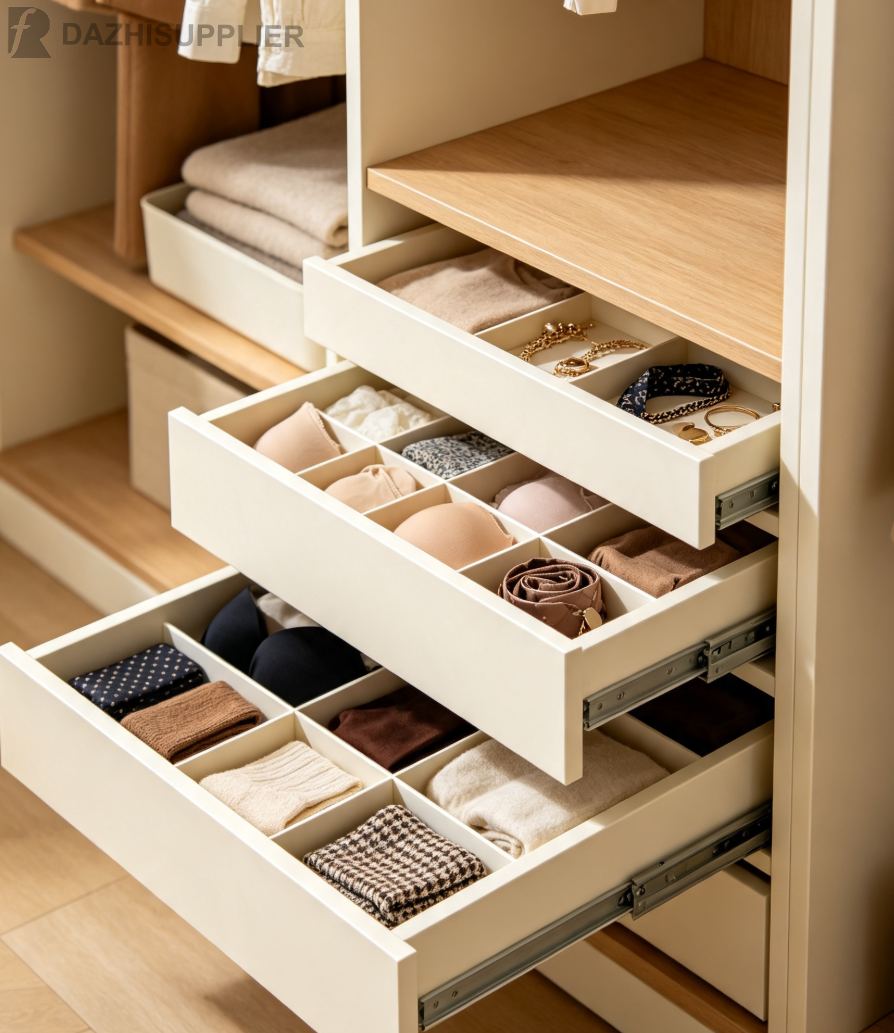
Drawers are far more useful than shelves.
But note: if you choose a handleless design, the bottom edge of the drawer front needs extra material or grooving – which eats into the interior height of the drawer, potentially shrinking it significantly.
✅ The right approach:
Determine drawer count based on your storage habits – underwear, socks, accessories all need drawers
Confirm how the handleless design will affect drawer depth
Add dividers inside drawers to keep small items organized
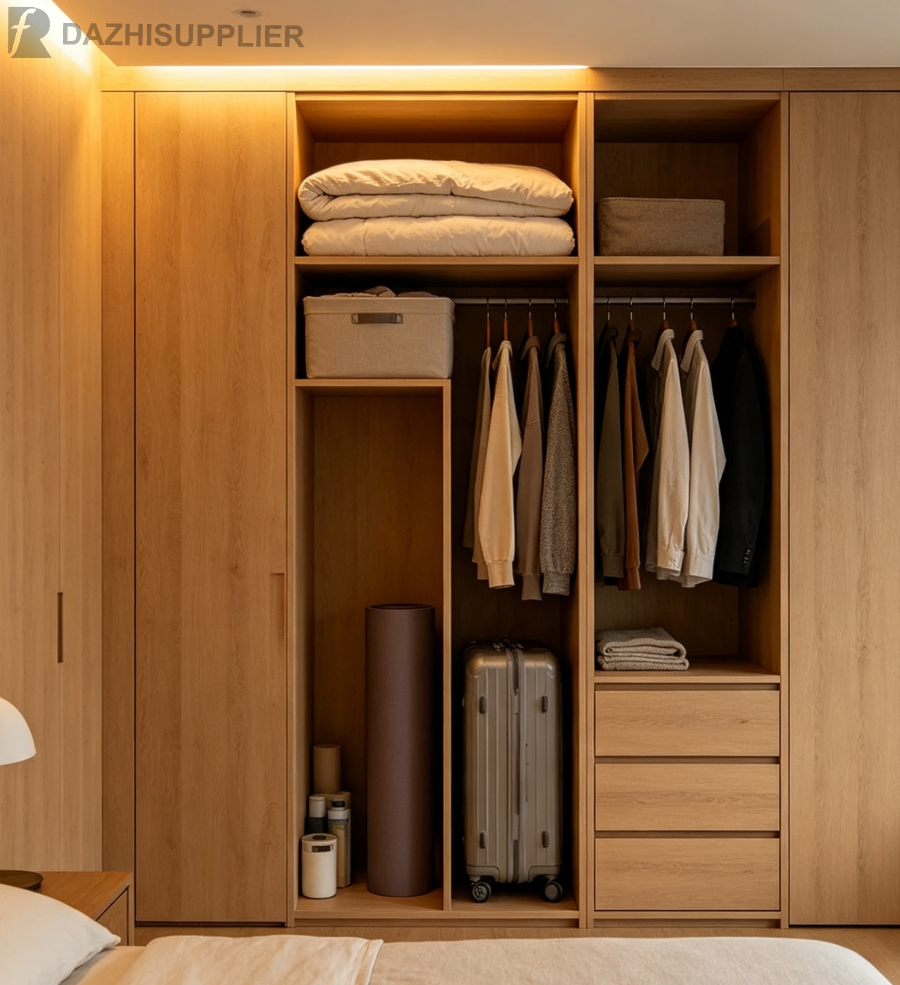
You don't have to "fill" every inch.
Reserve 1-2 flexible zones for future needs like:
Off-season bedding (bulky items, need larger space)
Suitcases (need at least 16 inches / 40cm height)
Yoga mats, garment steamers, or other daily essentials
Or storage bins you might add later
Mr. Wang had his wardrobe customized. The designer didn't ask about his habits and simply applied a template: lots of shelving, with only two hanging sections (one short, one long). After moving in, both he and his wife realized they're "hangers" – they prefer everything hung up. The shelves were largely unused, while hanging space was woefully insufficient. They ended up hanging their autumn and winter coats outside. Messy and inconvenient.
✅ If they could do it over: A wardrobe dominated by hanging space, with only a small portion reserved for folding and drawers.
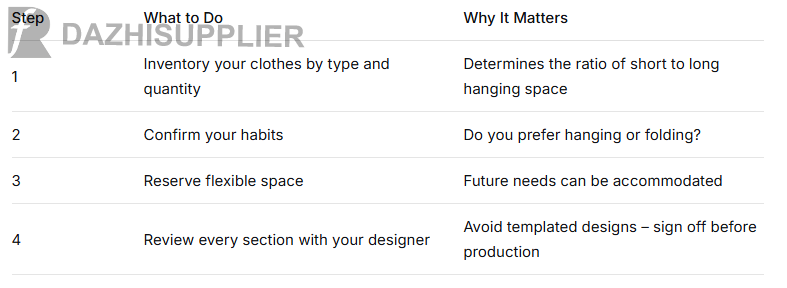
A wardrobe's usability isn't about how expensive the material is – it's about whether the layout works for you.
A great wardrobe design should be tailored to your height, your clothing types, and your daily habits. Prioritize hanging space, include enough drawers, and leave some flexibility – that's the kind of wardrobe you'll truly appreciate after moving in.
Planning a custom wardrobe? Contact us. We'll visit your site, understand your habits, and create a personalized layout – no templates, no shortcuts.
Contact: Cherry Fang
Phone: +86 136 2007 7702
E-mail: info@dazhisupplier.com
Whatsapp:8613620077702
Add: 748 Houjie Town, Dongguan City, China, 523000
We chat