Handle-free design has become the standard for minimalist custom cabinetry. Smooth, flat door surfaces with clean, crisp lines – undeniably sophisticated.
But as a one-stop custom cabinetry service provider, we've seen too many clients jump on this trend only to regret it later. Here's the honest truth: 3 pitfalls of handle-free design, and when it's right for you – and when it's not.
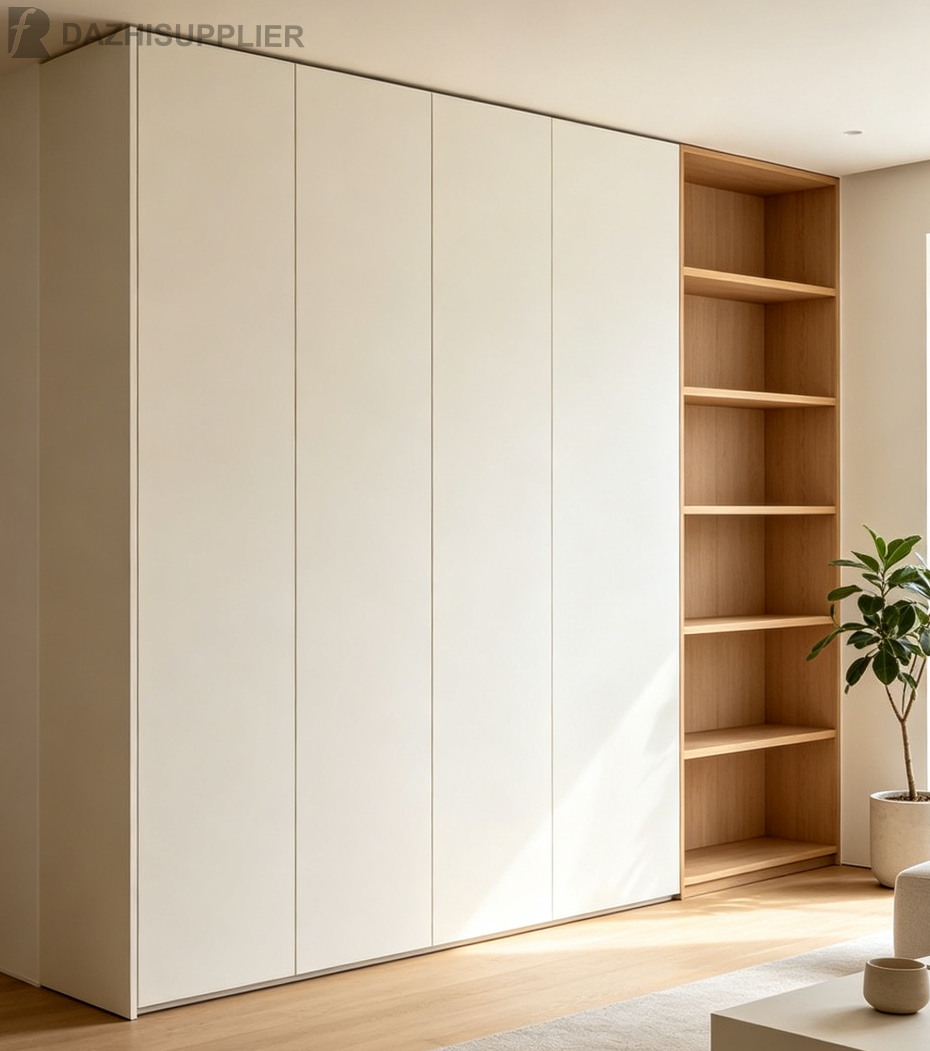
The common approach – door overhang (extending the door panel downward to serve as a handle) – directly eats into the drawer's interior height. A drawer that could have been 20cm deep might end up with only 16cm of usable space.
The result: Taller items won't fit, and the drawer's practicality takes a serious hit.
✅ Ask your designer before committing: How much overhang is there? What's the final usable drawer depth? Can we compensate by adjusting the cabinet height?
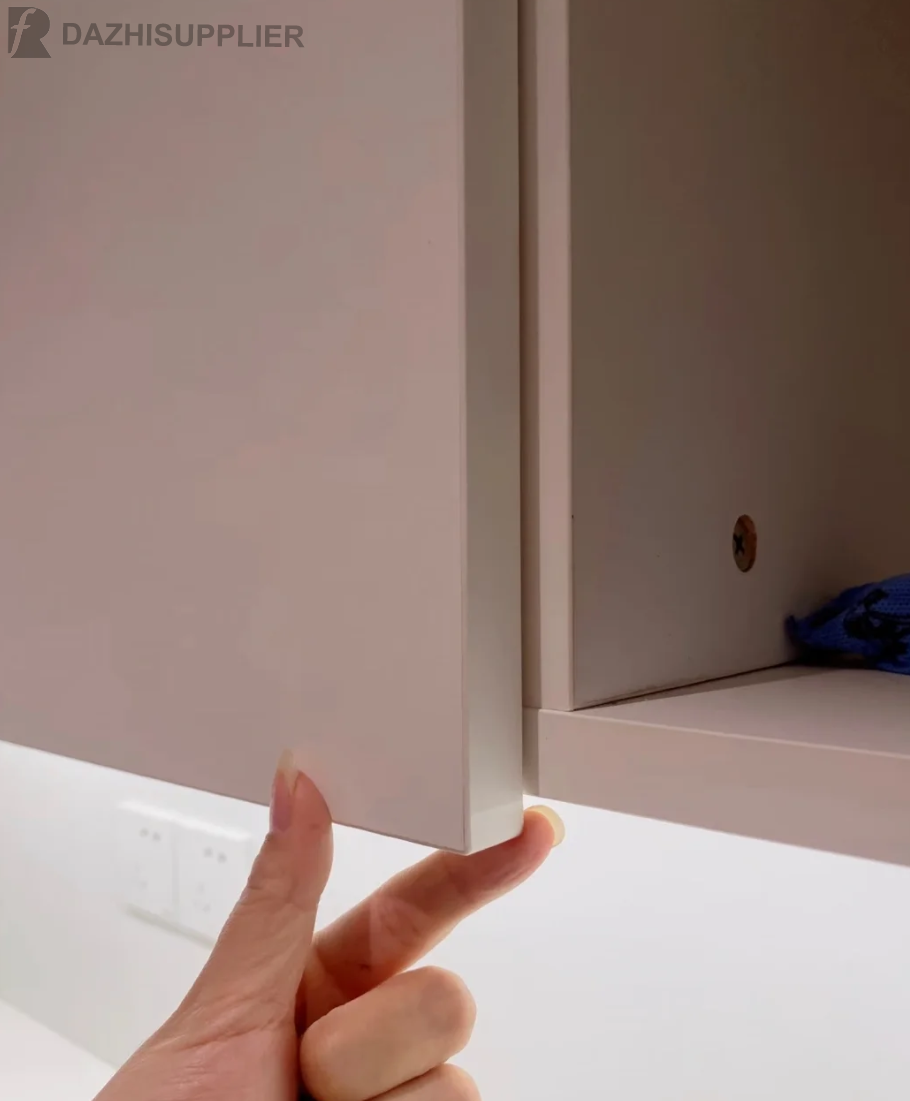
The notch position and overhang length for handle-free designs must be calculated with precision. If the notch is too high, it's awkward to reach; too low, and you can't get any leverage. This is especially tricky with overhead cabinets – if the position isn't right, shorter family members may not be able to open them at all.
Worse still: Everything looks fine on the drawings, but the problem only becomes apparent after installation. By then, the doors are already manufactured. Want to change them? That means reordering – and thousands of dollars.
✅ Confirm before production: Did the designer do an on-site re-measurement? Was the handle position designed based on the actual users' heights? If possible, test a similar model at the showroom.
If the finishing work isn't up to par, the notch or overhang area can leave an unsightly dark gap between door panels. The designer's renderings carefully avoid this with perfect lighting and angles – but in reality, that gap can look deep, abrupt, and anything but minimalist.
✅ Ask upfront: What finishing technique will be used for the handle-free detailing? Can we see a physical sample?
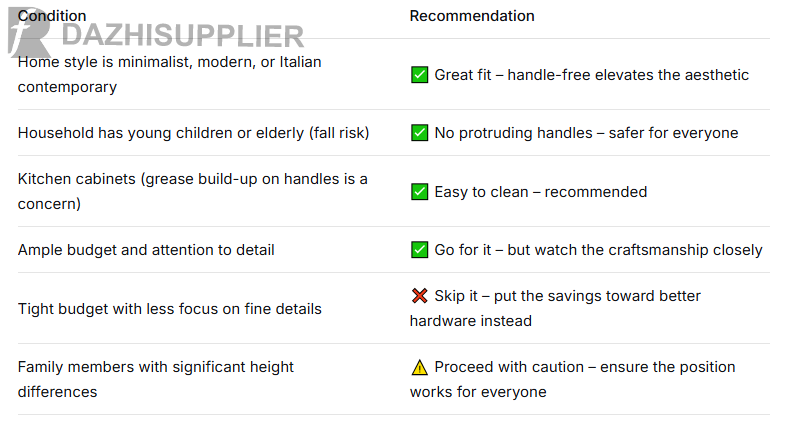
Handle-free design can be both beautiful and functional – but only if every detail is locked in during the design phase.
What's the overhang measurement?
What's the final usable drawer depth?
Whose height is the handle position based on?
What finishing technique is used for the detailing?
Before signing, ask your designer for detailed drawings with dimensions marked. Don't wait until the cabinets are installed to regret it.
Customization isn't about chasing trends – it's about making your home work better for you. Have questions? Contact us for a free assessment of whether handle-free design is right for your home.
Contact: Cherry Fang
Phone: +86 136 2007 7702
E-mail: info@dazhisupplier.com
Whatsapp:8613620077702
Add: 748 Houjie Town, Dongguan City, China, 523000
We chat