Selecting hinges for cabinet doors is a crucial step in whole-house custom cabinetry that determines the long-term user experience. It directly affects how smoothly and quietly the doors open and close, as well as their overall durability.
Hinges are primarily distinguished across three dimensions, each corresponding to different installation scenarios and user experiences.
Hinge Styles and Features
①By door panel overlay method (standard installation type)
This determines the hinge's appearance and installation method; choosing the wrong one could result in cabinet doors that do not close tightly or fail to fully cover the side panels.
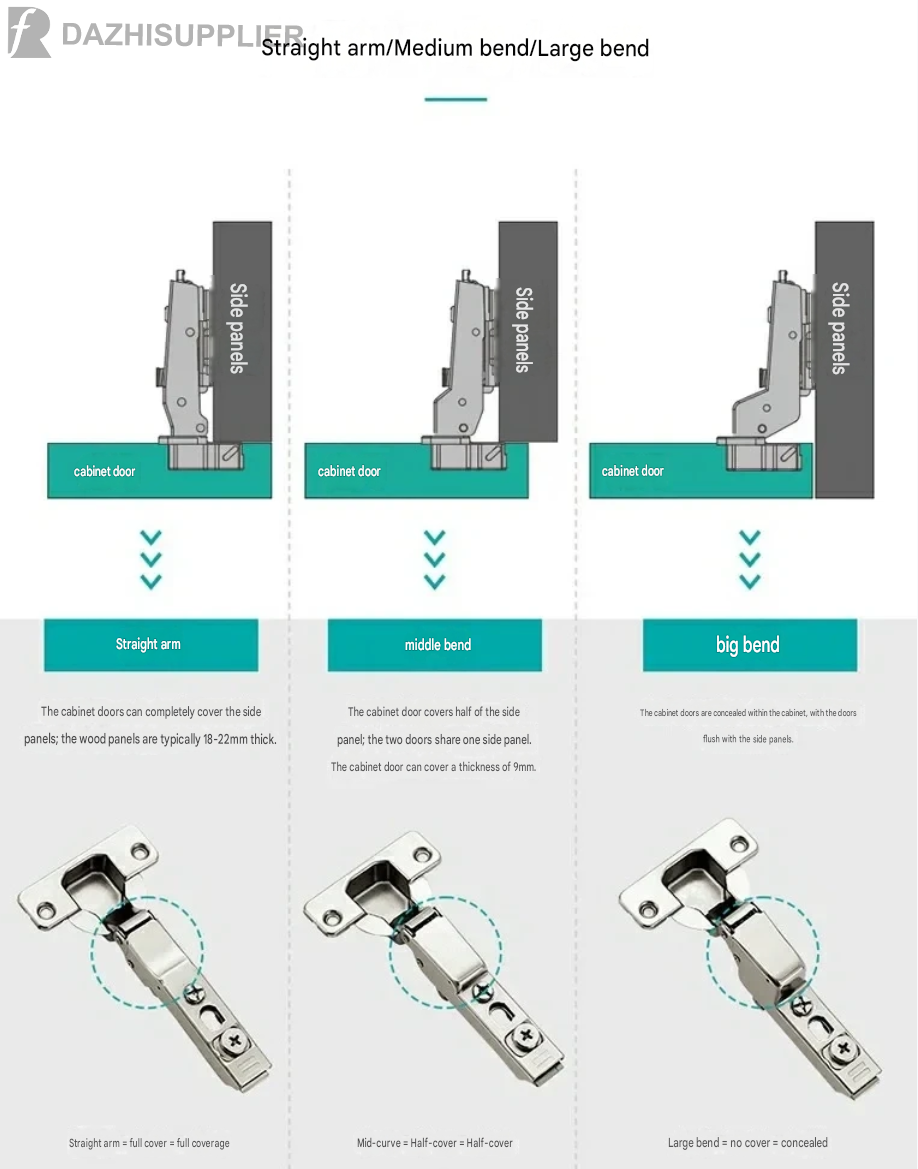
②By soft-close and opening/closing experience (Core functionality models)
This determines the smoothness and quietness of daily operation and is a key factor in distinguishing the quality grade of the hinge.
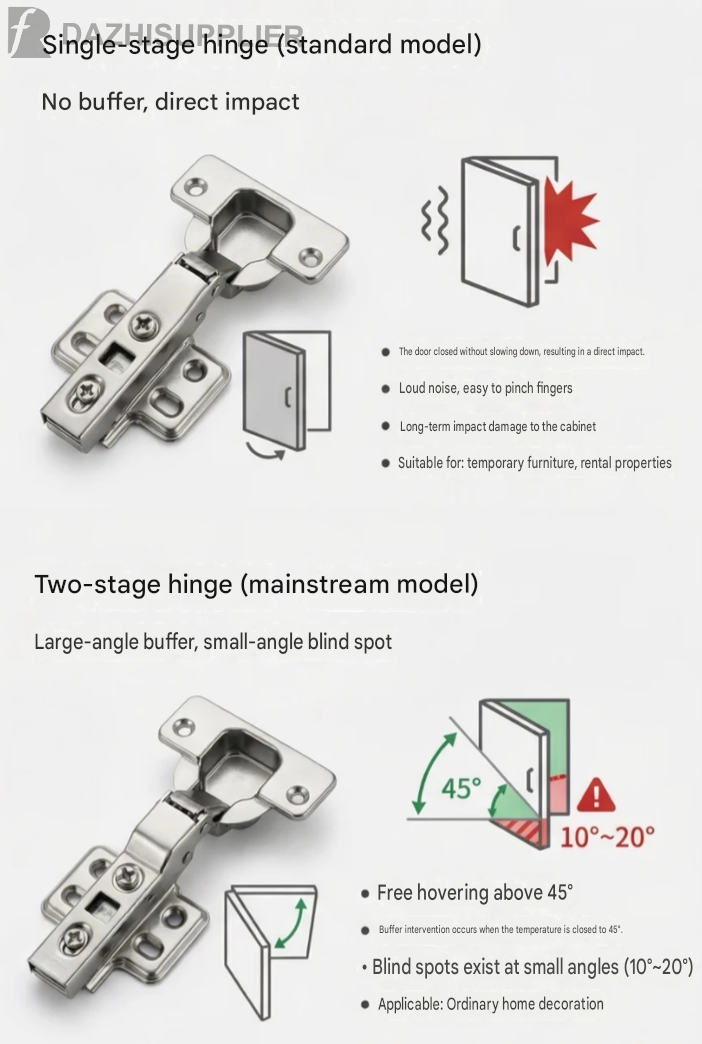
·Single-stage hinge: The force remains constant throughout the opening and closing process, with no soft-close mechanism. Closing the door results in a loud "bang" upon impact; it poses a risk of pinched fingers and can cause screws to loosen over time due to the vibration. These are best suited for areas rarely accessed—such as storage rooms or balcony cabinets—where noise is not a concern.
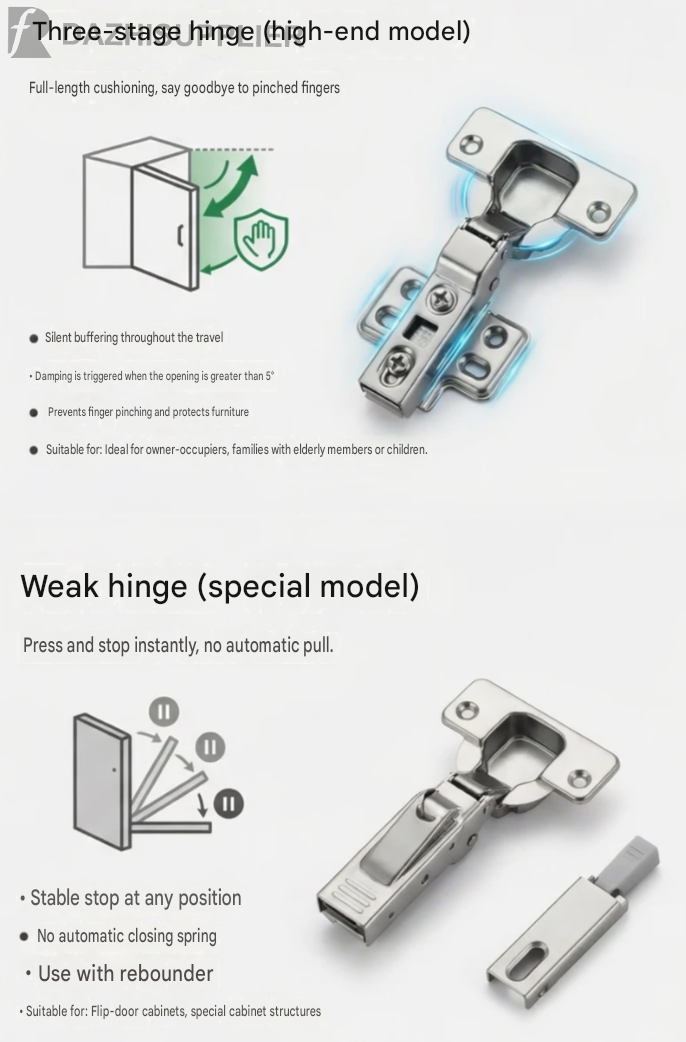
·Two-stage hinge (the mainstream choice for homes; highly recommended): Opening the door is effortless. When the door closes to an angle of approximately 25°, a built-in hydraulic damper engages, allowing the door to close gently, automatically, and smoothly. It operates quietly, prevents pinched fingers, and offers the best value for a whole-home setup.
·Three-stage hinge (premium experience): Building on the features of the two-stage hinge, this type adds a stable intermediate zone that allows the door to stay open at any angle. It is particularly ideal for kitchen corner cabinets or children's wardrobes, where having both hands free to retrieve items is beneficial. These come at a higher price point but are worth considering if the budget allows.
③ By special function and application scenario
·Concealed hinges: Completely hidden when the door is closed, offering a cleaner look that suits minimalist styles. They require precise installation and are typically used in high-end custom cabinetry.
·Wide-angle hinges: Allow the door to open up to 165° or even 175°, making it easier to access items deep inside the cabinet and facilitating cleaning.
·Push-to-open hinges: Eliminate the need for handles; the door pops open with a light press, making them ideal for handle-free modern designs.
How can you quickly and sensibly select the right hinge?
In practice, you can make recommendations to clients based on the following key points:
1.Consider the environment:
·Kitchens and bathrooms: For humid environments, 304 stainless steel hinges are the best choice due to their rust and corrosion resistance.
·Other dry areas (bedrooms, living rooms): High-quality nickel-plated cold-rolled steel hinges are perfectly adequate.
2.Consider door panel size and weight:
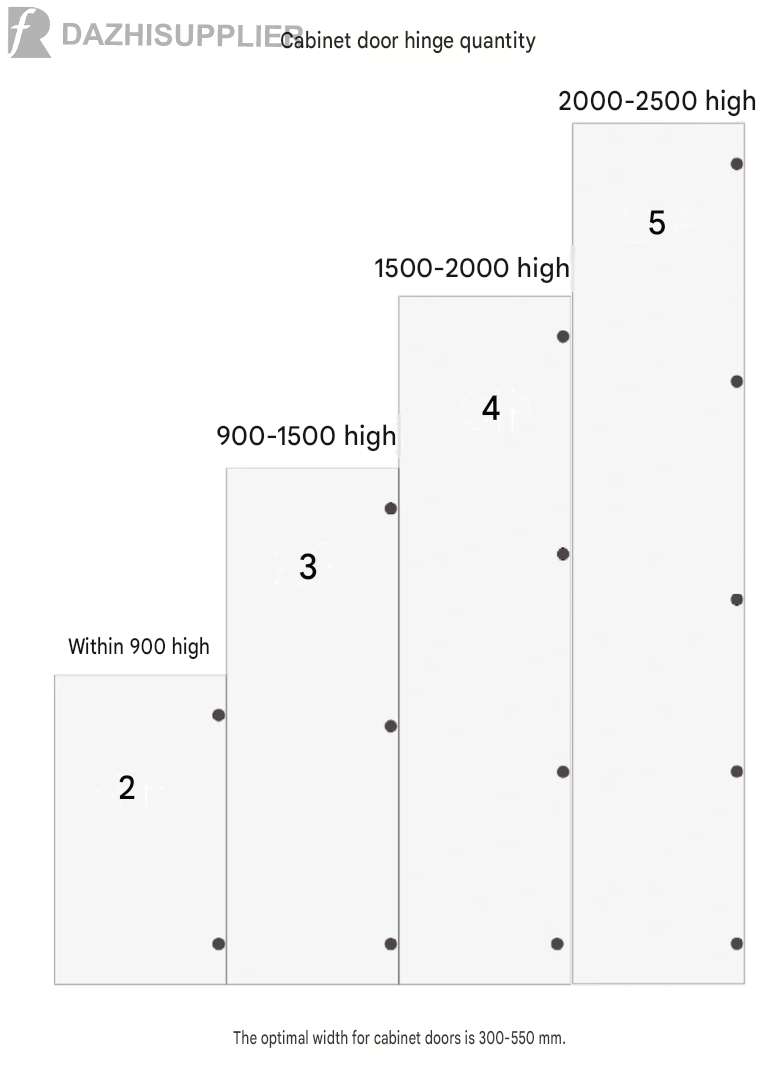
·Large/heavy door panels (e.g., floor-to-ceiling wardrobe doors): These require hinges with higher load-bearing capacity, such as European-style hinges. Generally, the heavier the door, the more hinges are required per door.
·Small/light door panels: These have relatively lower hinge requirements; concealed hinges can provide sufficient support.
3.Match budget and quality tier:
·As experienced renovation professionals often say, the choice of hinge should match the quality tier of the panel material.
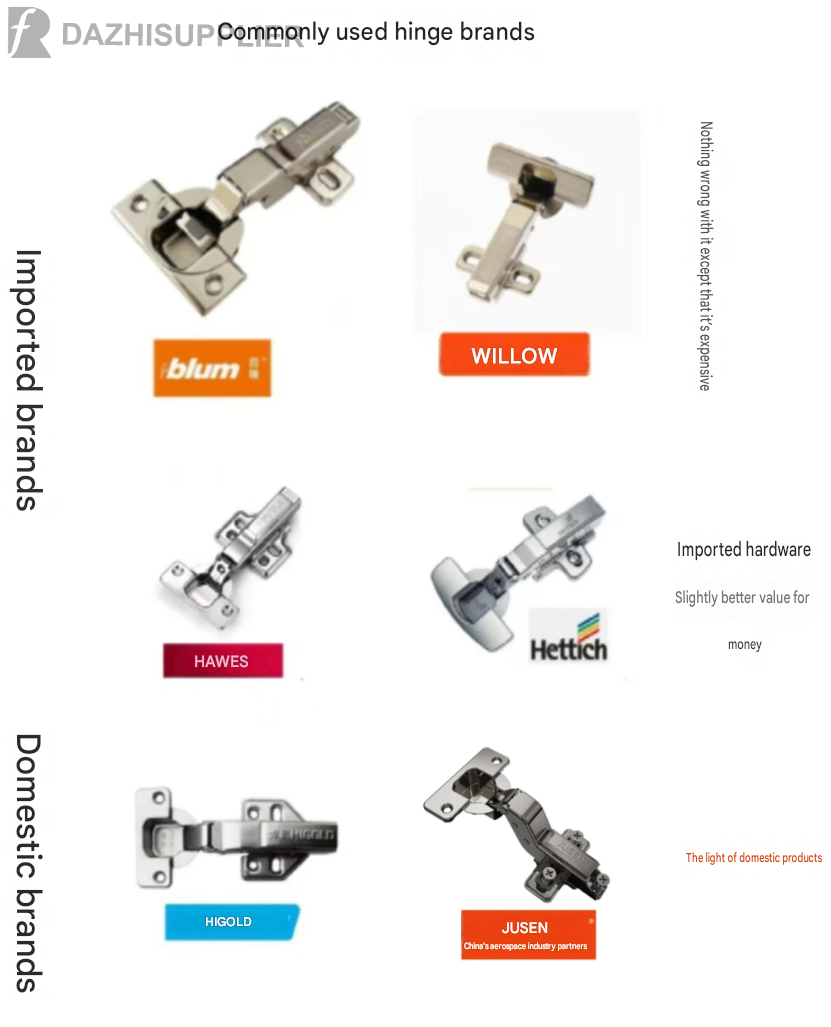
·For standard particleboard, cost-effective products from top-tier domestic brands (such as DTC or Higold) are sufficient.
·If using expensive imported solid wood door panels, consider pairing them with high-end imported brands like Blum or Hettich.
·The key is proper matching: using inferior hinges on high-quality panels, or using exorbitantly expensive hinges on standard panels, is a waste.
4.Key Recommendation:
·For residential use, opting for "two-stage soft-close" hinges throughout the home is sufficient, practical, and represents the safest choice with the best value for money.
·Ensure the contract explicitly specifies the hinge brand, exact model, material, and the presence of a soft-close mechanism; this prevents vendors from substituting inferior products by using vague terms like "standard hardware."
I hope this guide helps you demonstrate your professionalism to clients more clearly and enables you to select the most suitable products for them.
Contact: Cherry Fang
Phone: +86 136 2007 7702
E-mail: info@dazhisupplier.com
Whatsapp:8613620077702
Add: 748 Houjie Town, Dongguan City, China, 523000
We chat